I got lucky when I went to graduate school. For starters, my wife kept working and paying the bills. And I owe a debt of gratitude to my parents who were generous with their funds and contributed to my tuition. And there was the added bonus of taking two years to become a teacher (which, arguably, is the minimum time and effort investment that anyone planning to do the job should spend in training, but that’s a different post altogether) when, typically, the required investment of time is only a year of post-secondary education.
The extra year wasn’t a victory lap, it was purposeful and part of a unique program I enrolled in that believed that teachers needed an in depth understanding of psychology in order to do the job well. The extra year allowed for a broader look at child development and the measurement of development and learning than would typically be studied in a 1 year teacher training program. And, personally, I think it was time well spent. I learnt a lot. And sometimes, I get to use that knowledge, or see those lofty theories play out right before my eyes.
Today was no exception. We travelled 2.5 hours across the state of Florida to visit with the family of one of my wife’s closest and most treasured childhood friends. She has 2 kids. A 9.5year old daughter and a 6.5year old son. And its her son, and the amazing way that he and Charlotte played together today, that has me thinking.
In the field of child psychology, there is a concept called the Zone of Proximal Development (Lev Vygotsky). Look it up. It is one of the concepts that has been most enduring for me as a teacher and more recently as a parent. In a nutshell, it proposes that intellectual, social, and emotional development are social processes and that, while you might not be able to pin down the exact location of where an individual is with their personal growth (despite education’s complete obsession with measurement) you can identify a general region that a child’s development is taking place in. Conceptually speaking, if you locate the child right in the middle of their zone, then the stuff at one end of the zone is “easy” for them and well within their grasp while the stuff at the other end is challenging for them and requires them to stretch in order to achieve it. To take a simple example, Charlotte can do up the Velcro on her shoes no problem, when she wears shoes with laces, she can tie the overhand knot fairly well. And while she can almost make the two bunny ears of the bow, she can’t really get the bows together so that the shoes are well knotted and on her feet securely. But she will get there. Tying up her own shoes is within her Zone of Proximal Development – within her reach so to speak.
The goal of any good educator (teacher, camp counsellor, hockey coach, parent) is to do the stuff that helps their charge stretch upwards to the far end of their zone. Egg heads like me call that stuff scaffolding and it refers to the structures, routines, experiences, and processes we put in place around the child to help them reach towards the far end of their zone of proximal development. The end of the zone where the stuff is hard to do. If we put the wrong structures in place, we risk leaving the kid in the middle of their zone, not learning, or at the bottom of their zone, languishing and possibly bored. This can lead to something called regressive pull. Regressive pull is what happens to me whenever I’m around video games. Immediately, I’m 12 years old again and all thought of any responsibility other than defeating the monster and getting to the next level has gone out the window. Regressive pull is what happens to Charlotte when she and Ruby are sitting in the back seat of the car and there is only 1 dolly back there to play with. Even though Charlotte is increasingly less interested in playing with dollies, when her little sister has the only one in the car and is having fun playing with it, she wants it more than ever. Its backsliding. And while it isn’t always a bad thing, because video games are fun and sometimes, when there are 2 dolls around, its good to be able to find that common ground with your little sister and play at the same thing, generally speaking and in the bigger picture, and when it comes to learning, it is good to keep all of us moving forward.
Back to today.
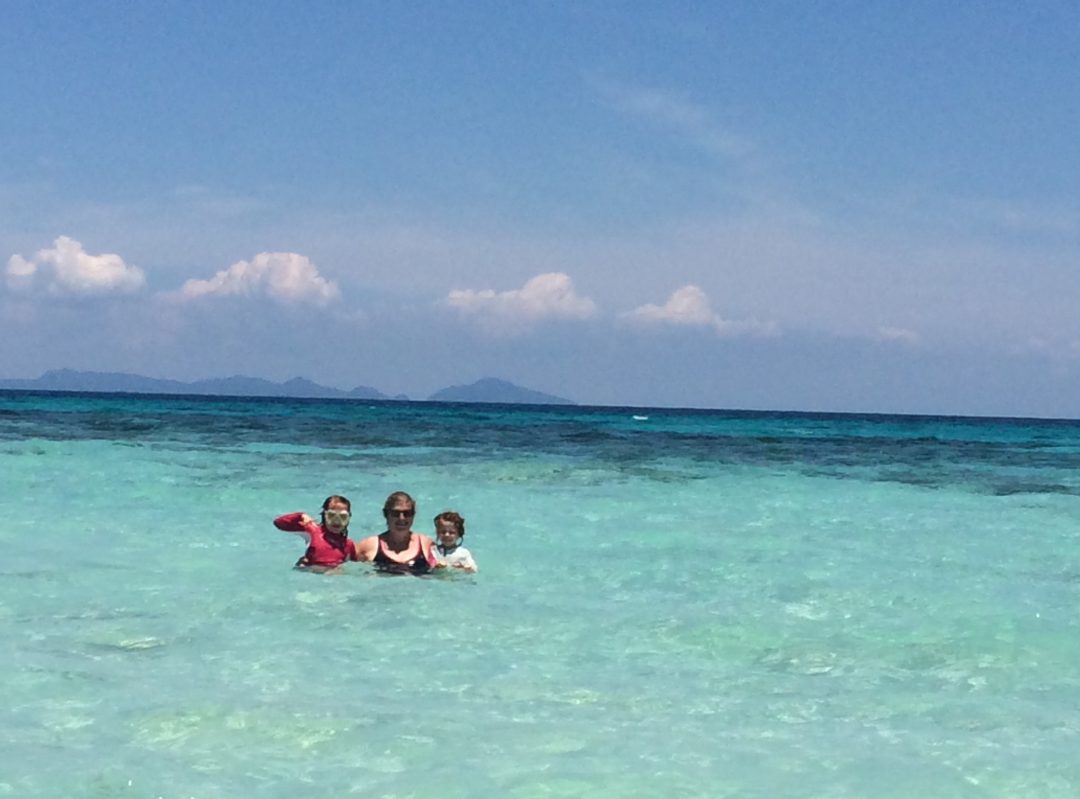
We went swimming this afternoon. I wish I’d had my camera. We’ve been swimming for about 2 hours a day for our entire vacation thus far. Its awesome. Charlotte has progressively taken more risks in the pool, duck diving into water that is deeper than she is tall to pick up things on the bottom, swimming comfortably on her back without any flotation devices to help her, etc. But one of the things she hasn’t been willing to try is jumping into deep water without anyone there to catch her and without any kind of device to float her back to the surface. That was, until today. Today, in the pool with the 6.5 year old son of my wife’s friend, who is about 1 year older than Charlotte and who was jumping into the deep water in the pool comfortably and without any kind of an aid or a catcher, Charlotte took about 3mins to decide that she was ready to do the same. And, with no prompting from me, or anyone else, but simply because she believed she was ready, she went for it. Didn’t tell me she was going to, didn’t ask permission. Just saw the other kid who was mostly like her but a little further along do something and decided that she had the skills to do the same thing. As a parent, it was a powerful moment to observe. I’ve known for a while now that she has the skills to do it. And I’ve been nudging her towards the experience, but I haven’t been able to get her there myself. It took someone who was in the same zone of proximal development as she was to help her overcome whatever hesitations she had about jumping into the deep water and try it for herself. And she succeeded too – although not without serious effort on her part – she really had to swim hard to get back to the edge afterwards – she did it though – and more than once!
Regressive pull was something that I learnt about in grad school – but what we didn’t spend enough time talking about was progressive pull. I don’t even know if progressive pull is a real term in psychology. Maybe I just made it up… whatever – it happened today – I saw it. And any parent who has worried about their kids getting in too deep on Facebook or experimenting with drugs and alcohol or bringing home unsavoury language from the playground knows exactly what I’m talking about. Progressive pull is a powerful force in a child’s life. In anyone’s life for that matter. And that’s why I think Vygotsky was so bang on with his Zone of Proximal Development. Its the structures and the experiences that we choose to surround ourselves and our children with that are going to influence the direction of growth and learning. Whether we are complicit in accepting the ones that are handed to us by governments and big business or choose to toil at creating the ones that are truly aligned with our values, hopes, and dreams, we have a role to play in stretching ourselves and our children upwards. And sometimes, we just get lucky on a Saturday afternoon and, while we are standing on the sidelines, things fall into place.

 3 Ginger Snaps