I am up at 5:25am to start this morning’s beach patrol. There is crazy lightning out at sea. I have been a fan of storms since childhood and I suppose it would be hard to do any better than the Pacific Ocean in this department. I take my time walking the beach and marvel at the fact that out at sea the storm is fierce but from my spot on the beach I have a view of an incredibly stary sky. I can even see the Milky Way – an increasingly rare phenomenon in most of my favourite natural settings due to light pollution.
My walk is uneventful. I feel dismay at the fact that the hotel just 50m down the beach from the Turtle Project insists on leaving its restaurant lights on all night. Any Turtle considering this beach from out at sea is sure to be dissuaded. I return with no sightings and no news and go back to bed.
* * *
I return to the main pavilion from brushing my teeth after breakfast and as I walk into the room I can tell that something is up: Izzati is hollering into the phone. It’s all in Malay so I have no clue what’s going on but one of the staff fill me in: the boatman is on the other end of the phone and he is teasing her about something. He says maybe he has found some eggs. He says maybe he hasn’t. Izzati escalates in both volume and tone and presses hard for more details. If there are eggs, they will be the first of the season for the project and everyone is eager to get cracking. I still don’t know what Izzati is saying but the tone of her voice changes and a smile breaks onto her face. The eggs are on the way.
We are immediately redirected from regular chores out to the hatchery to pull up weeds. We can’t dig the hole yet because the sand inside the hole would dry out and the eggs need to be in wet sand. By the time the hatchery is tidied up the eggs have arrived.

The eggs are in a styrofoam cooler and packed in sand. There are 113 eggs. Each one has been individually handled with the greatest of care. We are all clamouring for a look but there isn’t anything to see. Izzati won’t open the cooler until the hole is dug. And she shows how to get the job done. We start by moving all the loose dry sand back from the hole. The edges of the hole have to be free of the loose sand so that it doesn’t fall in while digging deeper. Also, the loose sand is too dry and too hot for the eggs. Female turtle flippers are simulated with a bowl from the kitchen. The nest where the eggs were collected was carefully measured so we know how far down to dig: 85cm. Those are some long flippers!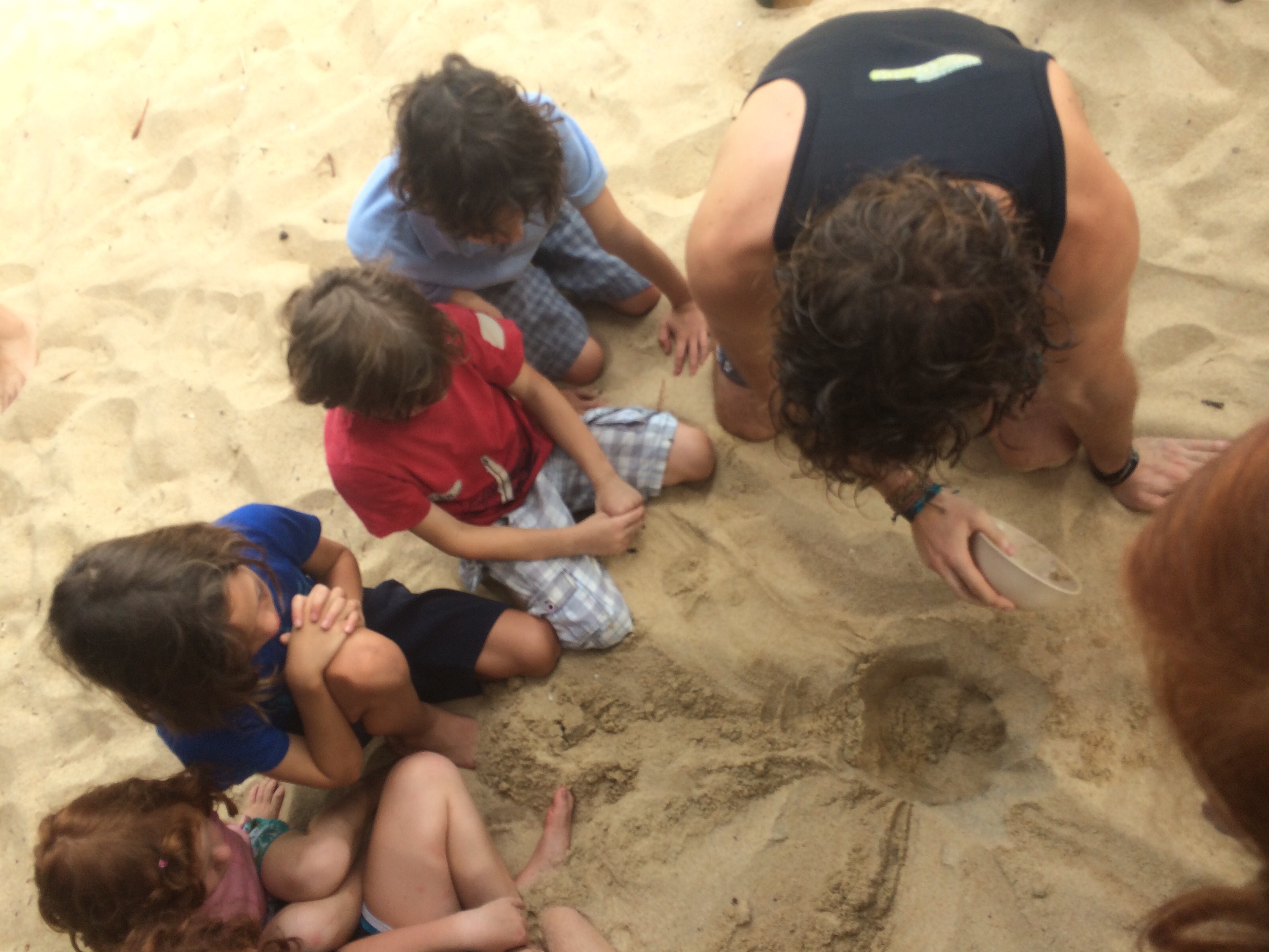
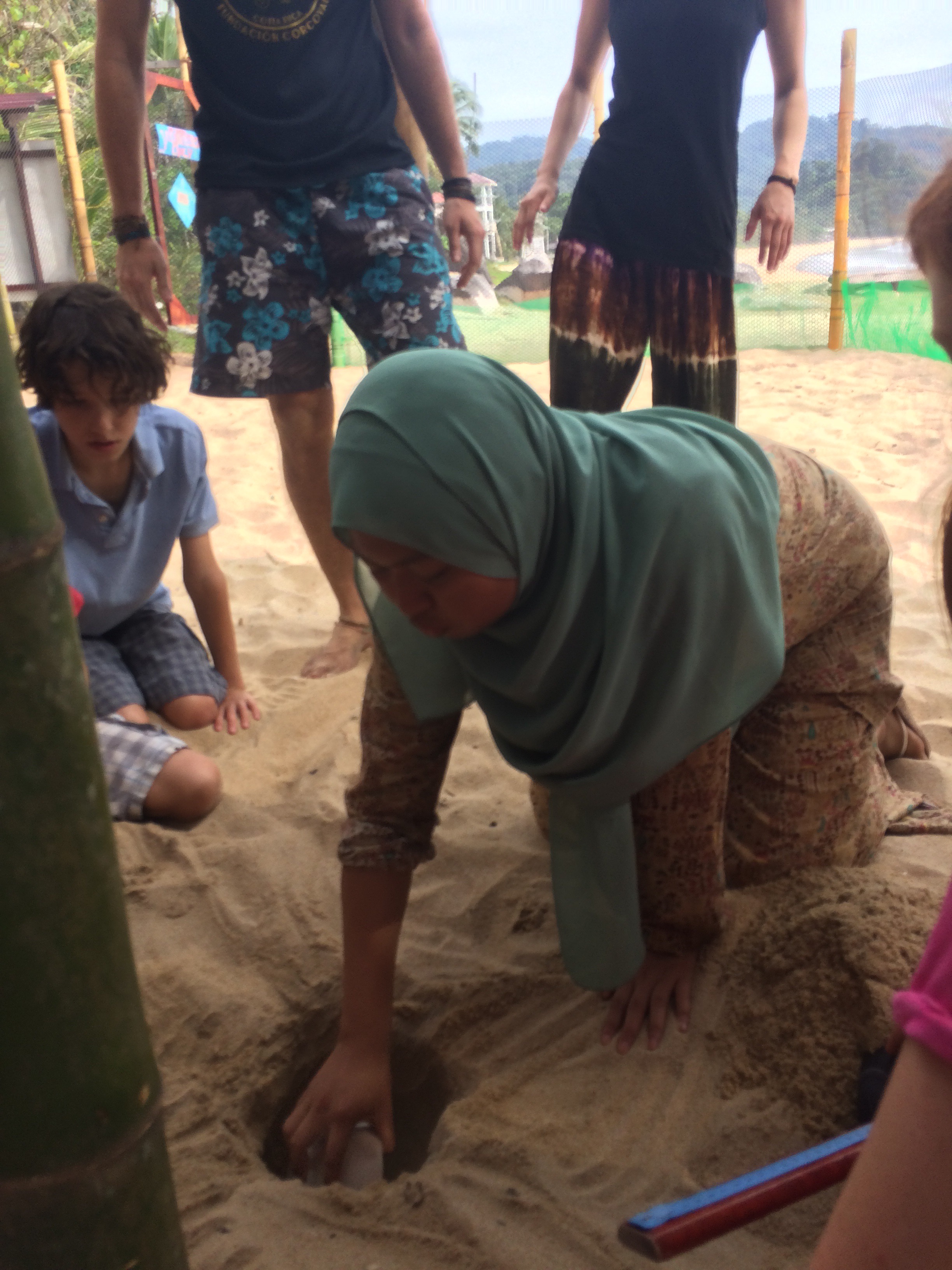
During the digging we are shoed away from the edge of the hole by Alberto. Alberto is traveling the world via turtle projects and this one is his fourth project in as many years. He explains that we don’t want to destabilize the walls of the hole by being too close to the edge. Seems to make sense but it is hard to keep the kids back once the process begins. Alberto is brilliant in his protection of the nest. He is the project’s hatchery manager this season and if anyone crosses his perimeter he lets them know it. He himself lays flat to the ground, mindfully distributing his weight across the beach the same way i know to do on cracking ice. The transplant begins.

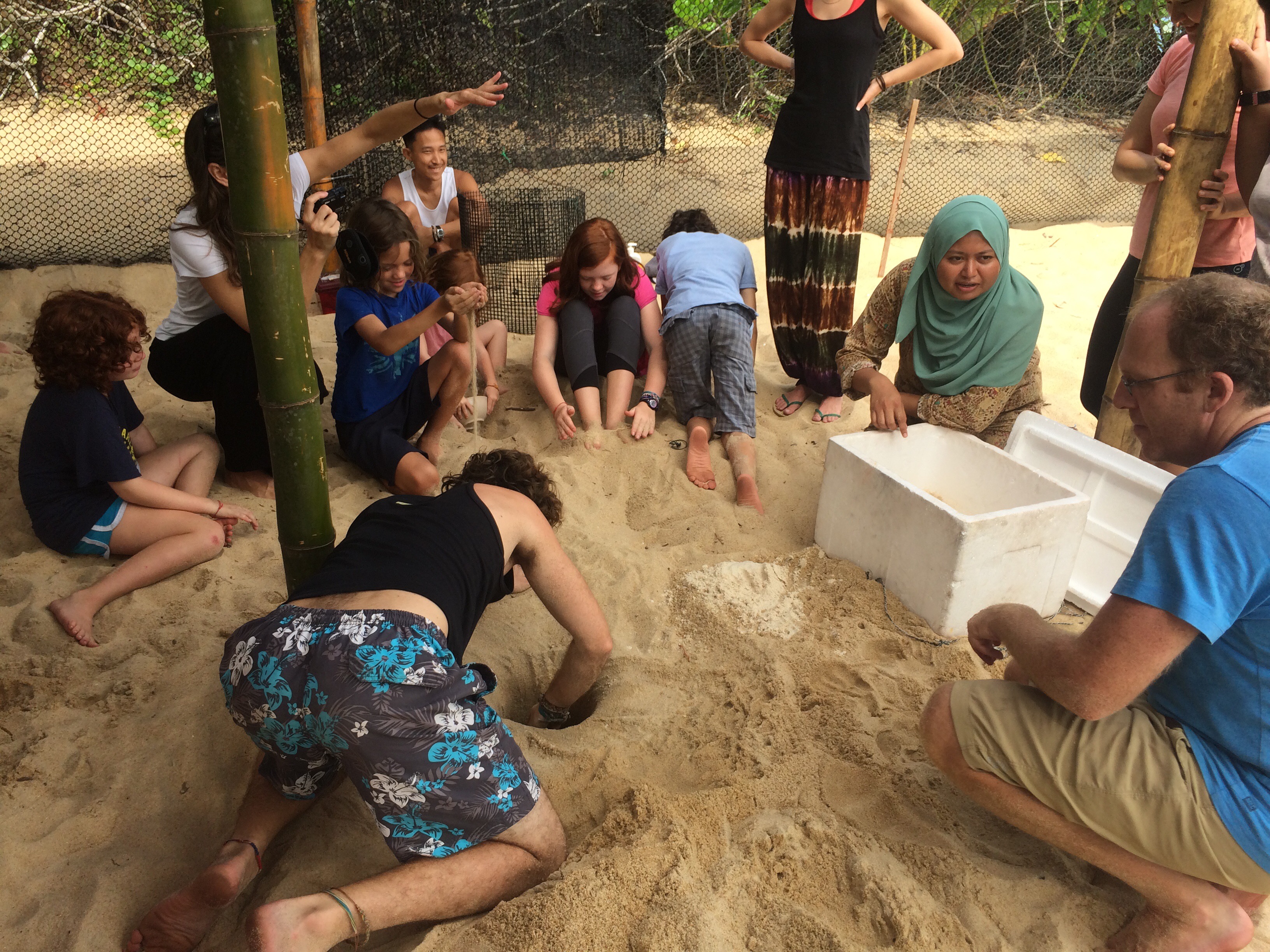
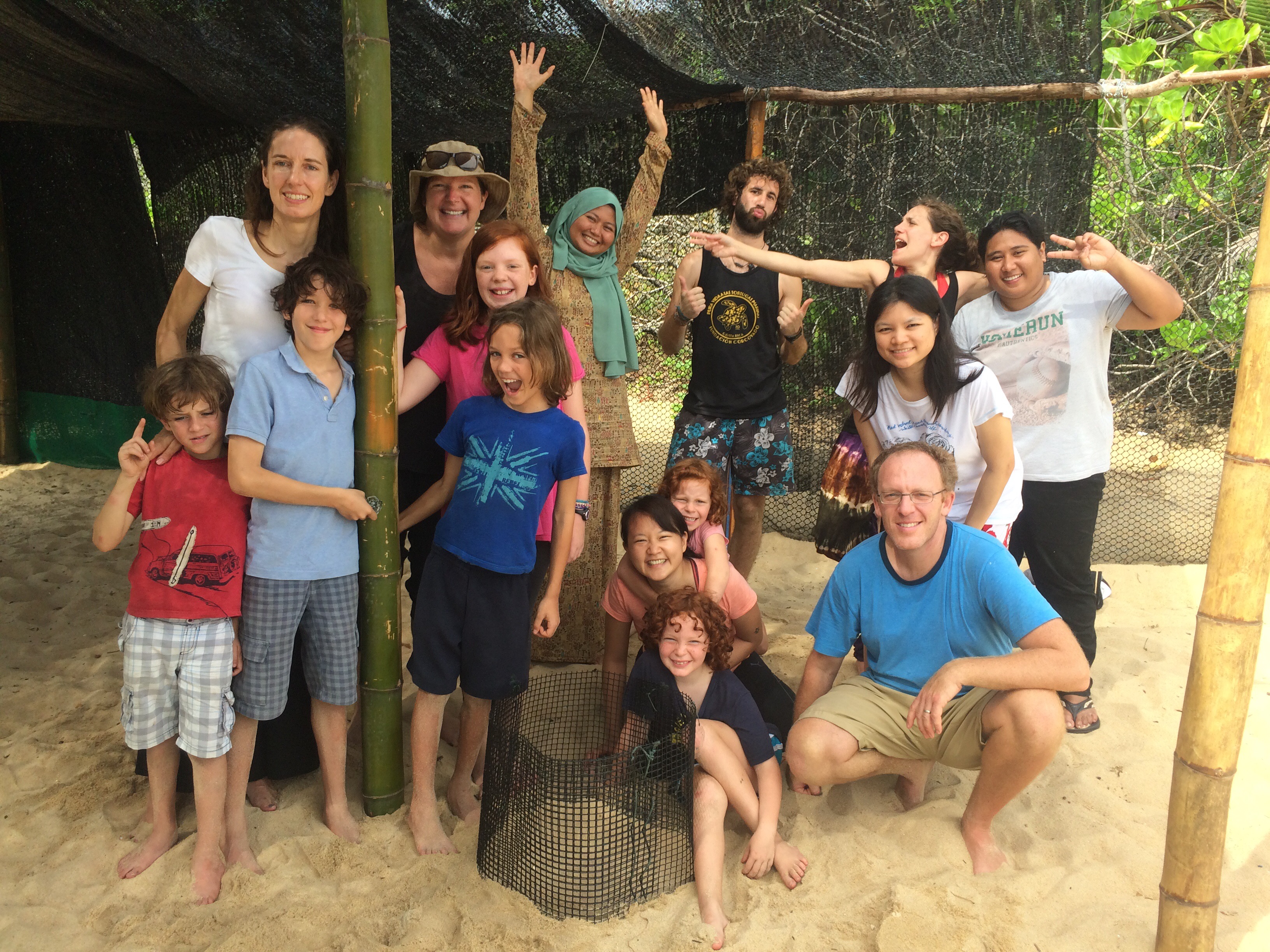
Each egg is about the size of a ping pong ball – although much softer. We are all given the privilege to take part in the transplant and move the eggs with all the tenderness we have – but still the walls of the eggs dent as we handle them. Each egg is picked up from the cooler, kept in its vertical orientation, placed gently in the sand and then picked up again by Alberto and placed in the hole. This is what we have been waiting for and we are filled with gratitude for the opportunity to witness and participate in this conservation effort.
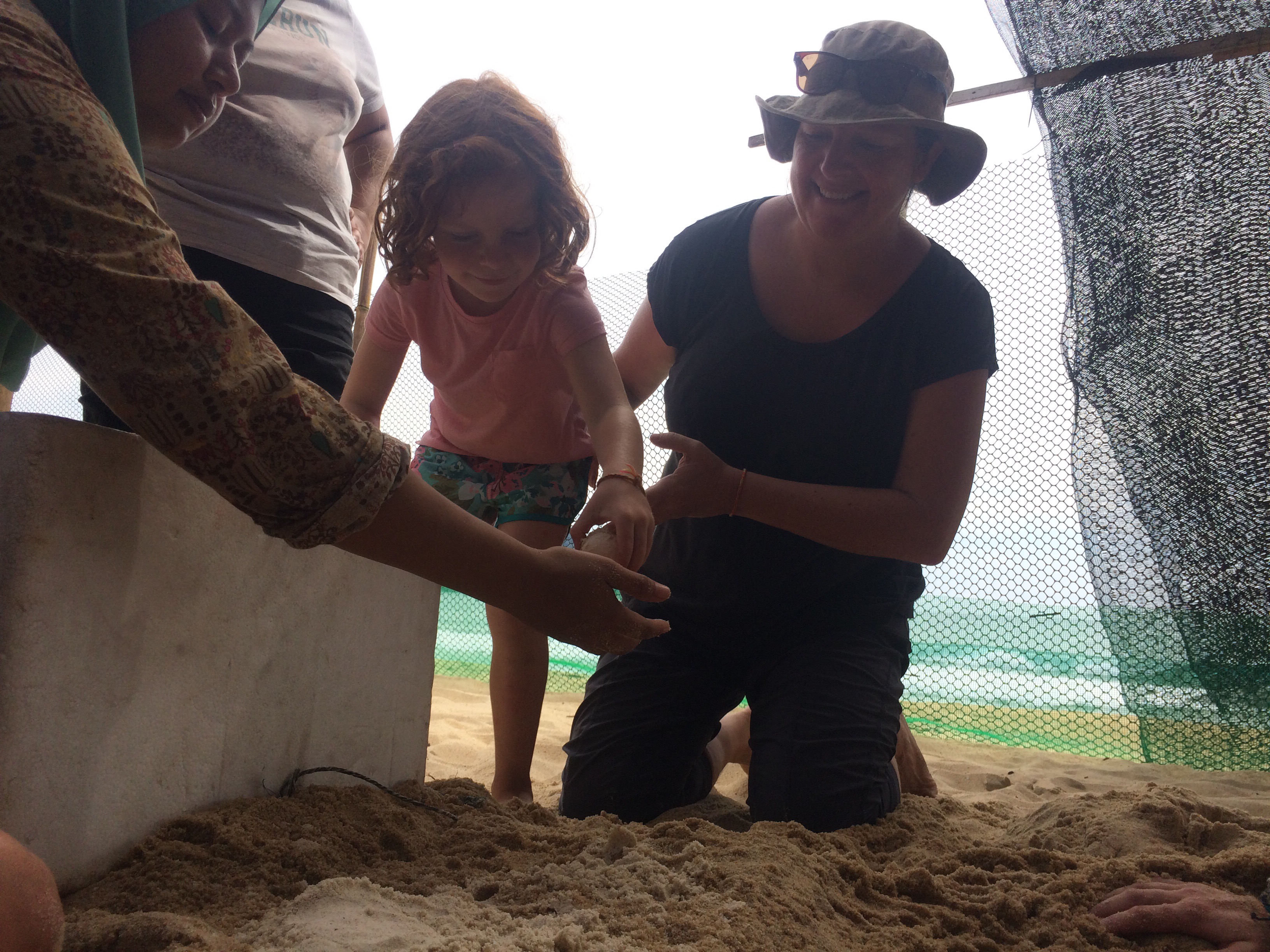
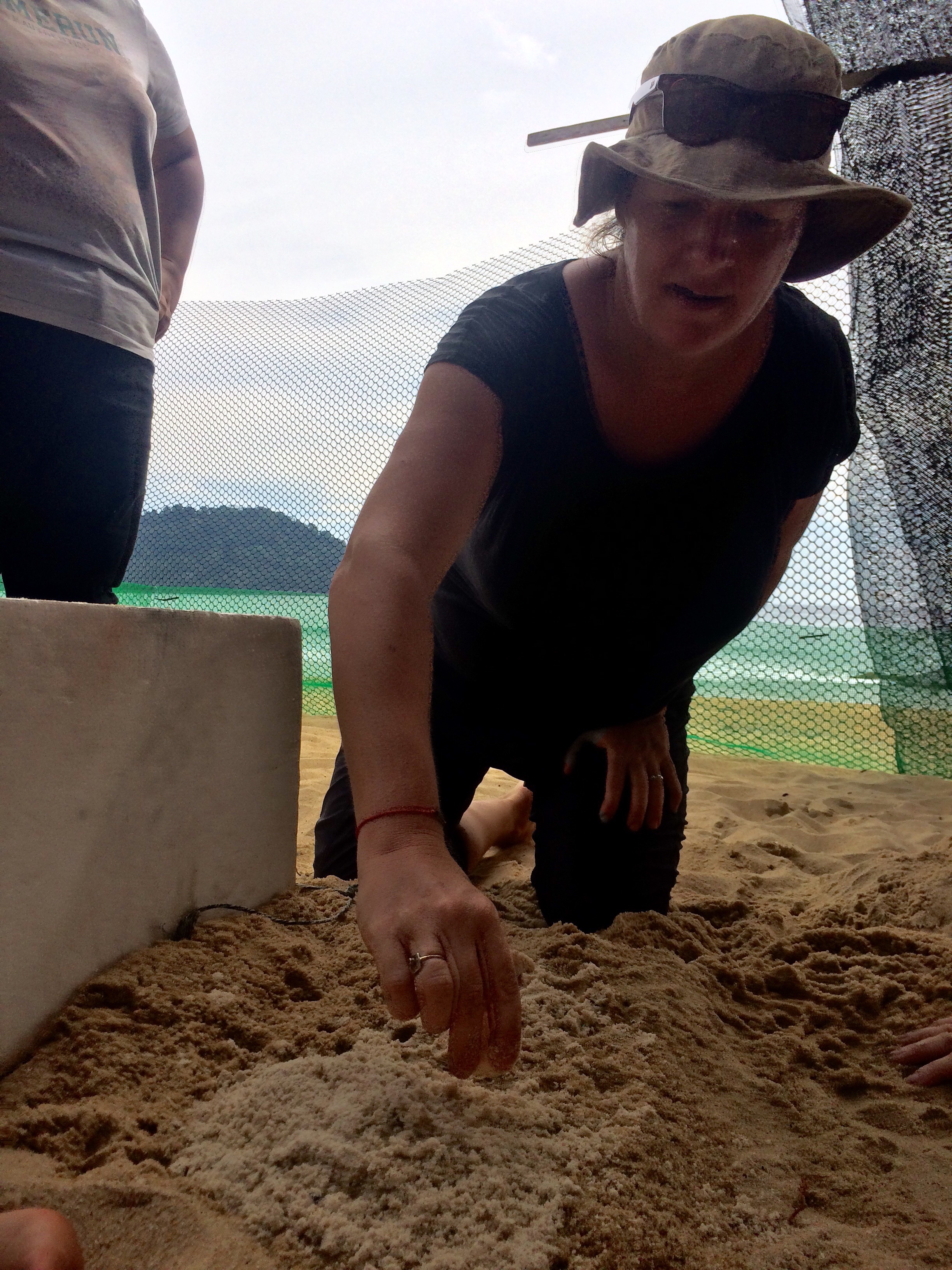


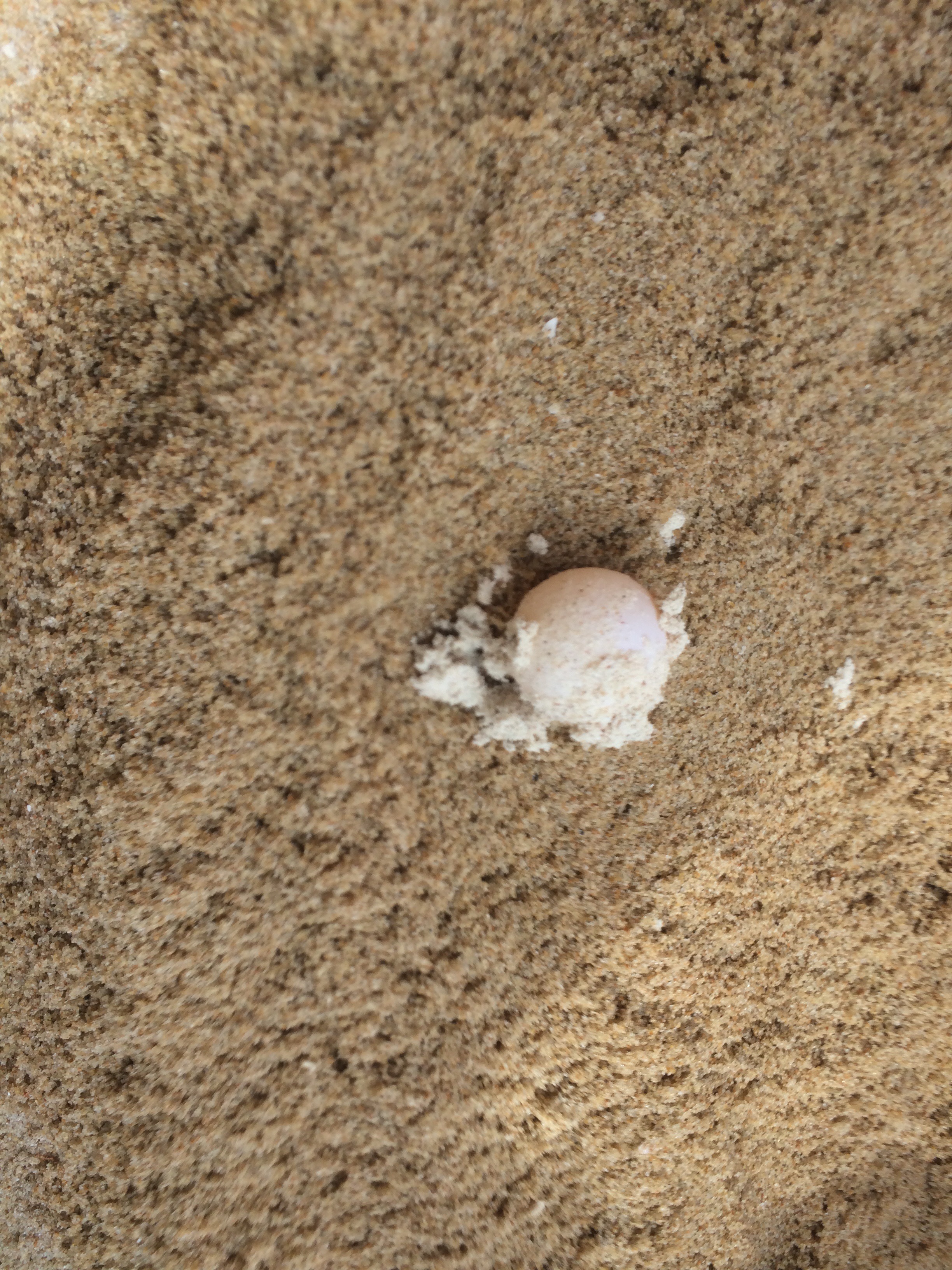

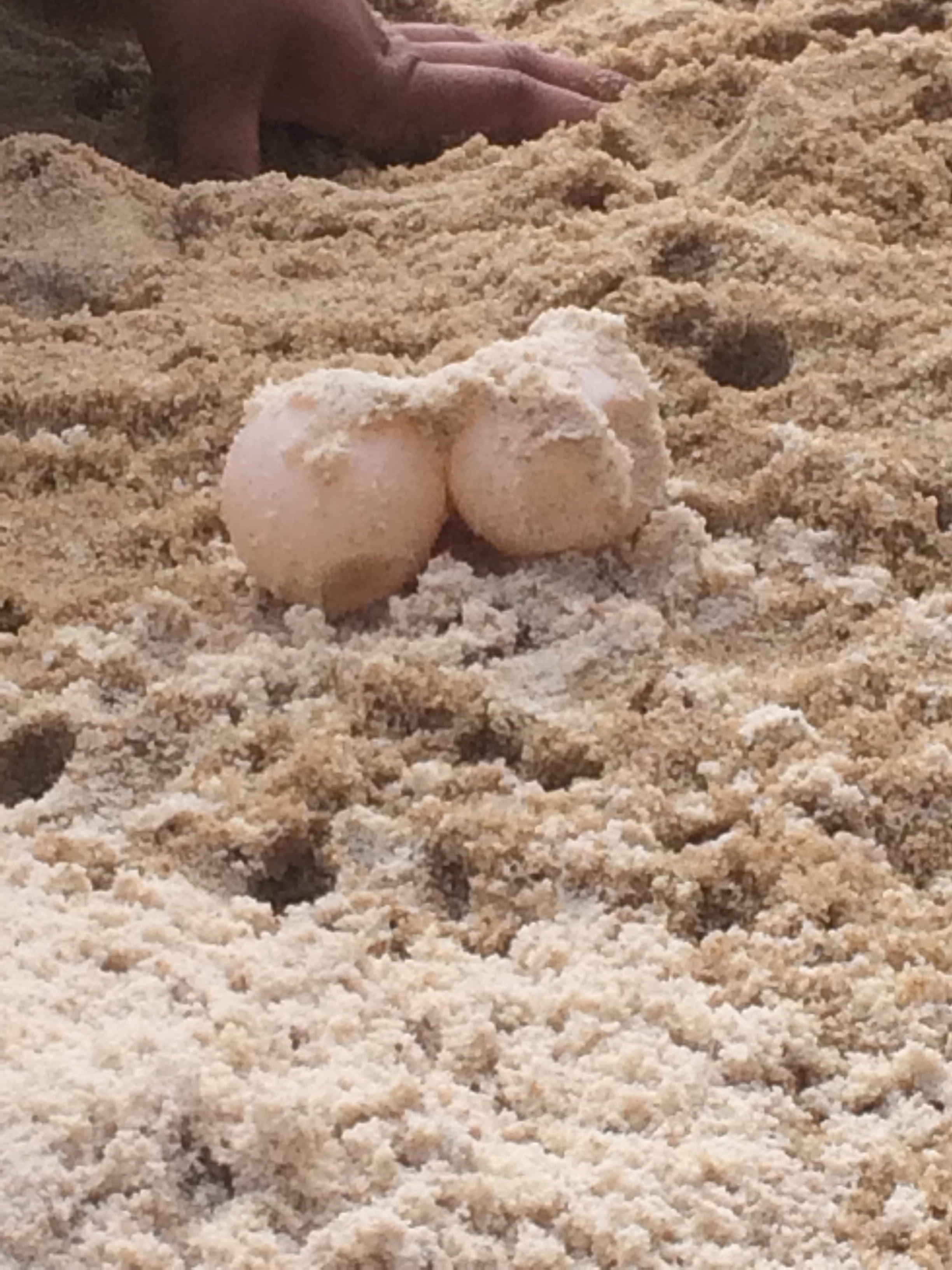
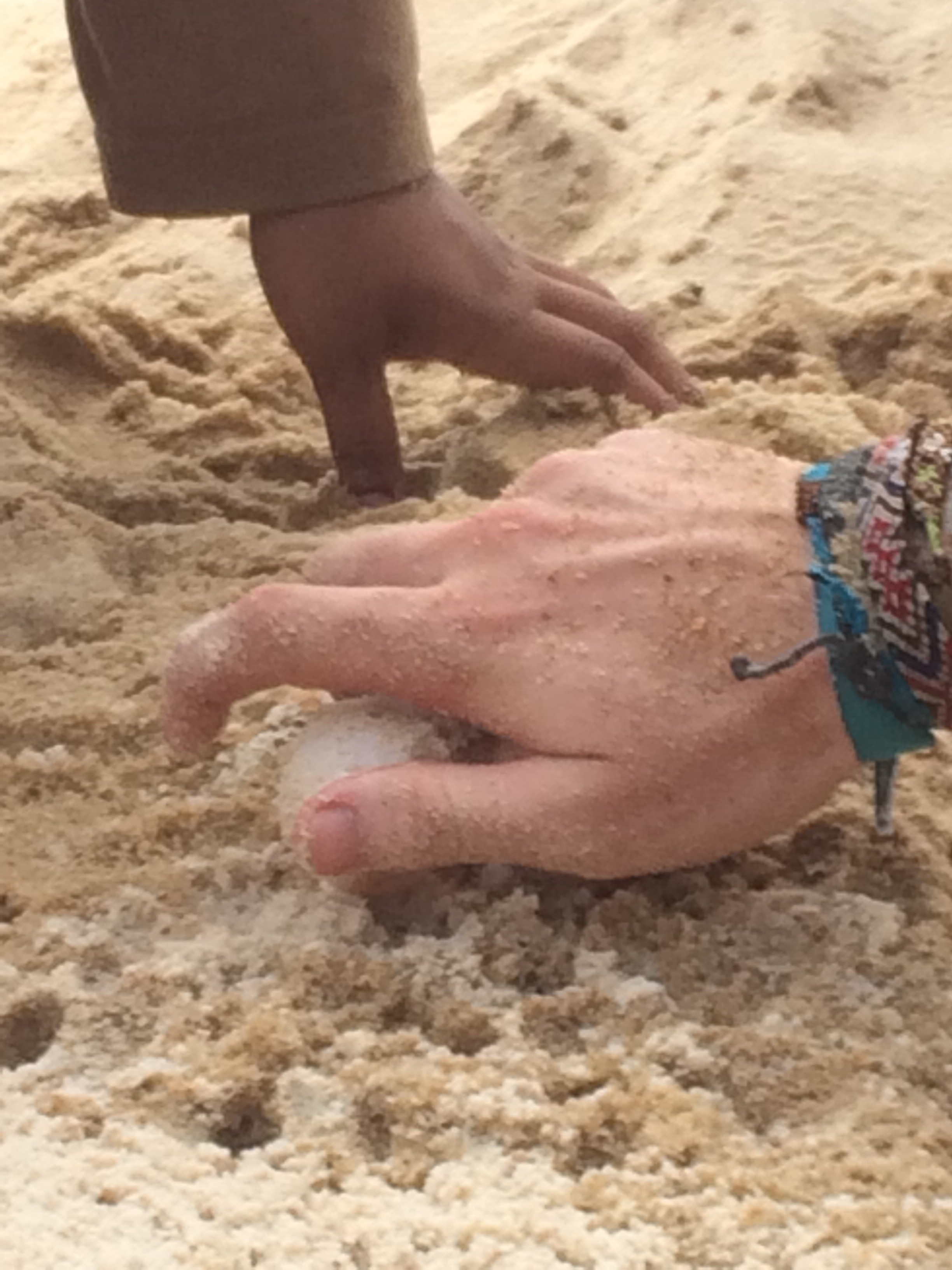
We carefully cover the eggs with sand. The shade provided by the netting above the hatchery will simulate the shade provided at the beach vegetation line. The temperature of the eggs affects the gender of the hatchlings. The eggs need to be high enough on the beach to not drown at high tide and low enough to stay moist. How the female knows where to put the nest is a mystery. If all goes well, about 90 Hatchlings will claw their way to The surface in about 60 days and then be released into the ocean by the hatchery staff while local birds are kept at bay for as long as possible. Then it’s up to the turtles to swim straight out to see, find a bed of floating sea grass, and start eating.
* * *
Later in the day I have the chance to sit down with Izzati. I am full of questions and I start firing away.
I learn that the boatman gets paid by the egg. In addition to the fee for his time and the cost of the petrol, the boatman gets about $0.30CDN per egg. This is to compensate him for his knowledge of how to harvest the eggs and also to discourage him from “not finding” any eggs in the morning and going back in the afternoon to collect them for his own purposes. A turtle egg fetches about $1.00CDN in the island market and as much as $2.00CDN on the mainland. All in all, this morning’s trip will cost the project about $70.00CDN.
I also learn a few more things about this conservation effort from Izzati. I learn that turtle egg harvesting is a deeply important part of the Malay culture and that it has been going on for centuries. These days, egg collection on the island has become increasingly competitive. The boundaries of where you are and are not allowed to search are strictly defined within local villages and custom and egg collectors have been known to carry machettes and aggressively confront anyone found prowling the wrong turf. I learn that after 6 years, Izzati feels as though she is just staring to have an influence on local beliefs about the eggs and the threats to the turtles. Many people would rather believe that the threat to the turtles is from fishing nets and that digging up one nest doesn’t have any impact compared to the number of turtles dying at sea. It’s easy for me to understand this mindset. After all – it’s the tar sands development in the north that is having a drastic impact on the health of caribou populations; I’m not hurting them when I put gas is the car (or fly around the world on a jet…) In reality, local people are hungry for jobs and when a new hotel opens up that offers upwards of 40 jobs to people trying to make a living compared to the 5 people employed by the Turtle Project, well, cognitive dissonance is a very real thing and it is a whole lot easier to blame fishing nets than the job that is feeding your family for the decline in nesting sites.
After exploring a few more local issues with Izzati I realize that while learning about the struggles associated with turtle conservation is all well and good what I am really interested in is learning more about Izzati and what makes her tick.
She tells me that from a young age she always preferred to get her hands dirty and tag along with her brother and his friends instead of playing with the rest of the girls in the village she grew up in. She can’t explain where her sense of humour comes from other than to raise her eyebrows with amusement at what seems to have been a very absurd question. “It comes from inside myself” is all she reveals on the topic.
What I really want to know is where her determination comes from. She has worked here 6 years and seen the number of nesting sites drop 6 years in a row. I ask her if she feels as though she is fighting a loosing battle. The elegance of her answer leaves me with no further line of questioning. There is no counter point to her resoluteness.
“The turtle population isn’t improving but It’s not the end. Sometimes it feels like a loosing battle but we have other projects to do. Lots of local people rely on the project for employment. And we got a nest today.”

 3 Ginger Snaps
Thanks for writing this post so honestly! 2nights on Friday night, 14th April, we got a nest in front of Coconut Groove! And in the morning we got another nest from Coral Island. So basicly 2nests in a night and nesting in Mentawak =)
Please say hi to everyone .
Will keep reading your blog!
xxxxxxx
Iz
*raising eyebrows with amusement*
LikeLike
Happy all the snaps got to save some hatchlings. Another great read full of interesting facts.
LikeLike